
CPN PDF refers to a specialized format that embeds control‑plane network diagrams within a portable document. It enables engineers to share, annotate, and preserve complex network schematics while maintaining cross‑platform compatibility and security. It supports annotations and versioning teams now
What is a CPN PDF?
A CPN PDF is a specialized document that embeds Control‑Plane Network diagrams into a Portable Document Format file. Unlike static PDFs, it includes interactive nodes, routing tables, and status indicators, allowing network teams to view and manipulate topologies directly within the document. This format is especially useful for compliance documentation, training materials, and collaborative design reviews, as it preserves layout fidelity while enabling dynamic interaction.
Each diagram element becomes an annotation carrying metadata—IP addresses, VLAN tags, interface states—and can trigger scripts for live status checks. Links are vector graphics with attributes for querying or updating via PDF form fields, merging visual representation with machine‑readable data. The annotations are stored in the PDF’s internal structure, ensuring that even when the file is opened on a different platform, the metadata remains intact and accessible through standard PDF readers, and supports cross‑platform consistency.
Key features include interactivity (clickable routers opening configuration pop‑ups), version control (timestamps and signatures), security (encryption and digital signatures), and portability across OSes and browsers. Because the PDF standard supports encryption, sensitive network information can be protected, and digital signatures can verify that the document has not been altered.!
- Interactivity: Routers!! open pop‑ups.
- Security: PDF encryption protects data.!!
Generation involves exporting a diagram from tools like Visio or Lucidchart to PDF, then enriching it with custom annotations and form fields using specialized software. Advanced generators add JavaScript to fetch live SNMP or REST data, turning the PDF into a live dashboard. The embedded JavaScript can also trigger alerts when a node status changes, providing real‑time notifications.
Organizations embed CPN PDFs into documentation pipelines, linking them to version control systems like Git. Change logs and author annotations create a clear audit trail, essential for compliance and incident response.
Applications and Use Cases
CPN PDFs are employed across many network‑centric disciplines. In training, instructors embed live topology snapshots that students can click to view configuration details, enabling hands‑on labs without separate software. Compliance teams use them to archive network maps that meet regulatory audit standards; the embedded metadata and digital signatures guarantee integrity over time. Documentation writers embed CPN PDFs in design handbooks, allowing readers to drill down into interface tables or routing protocols directly from the PDF.
- Collaboration: Teams share a single file that contains both visual diagrams and editable form fields, reducing version drift.
- Incident response: Operators open a CPN PDF to see real‑time status overlays, quickly locating fault points.
- Vendor integration: Service providers attach CPN PDFs to service level agreements, ensuring that both parties reference the same topology.
- Remote troubleshooting: Field technicians download a CPN PDF and interact with the network map offline, then sync changes back to the central repository.
Because the format is platform‑agnostic, CPN PDFs can be viewed on Windows, macOS, Linux, or mobile devices, making them a versatile tool in any network lifecycle. Its embedded scripting can pull live SNMP data, and the PDF’s JavaScript engine can trigger alerts or update fields automatically, ensuring diagram reflects real‑time status without manual refresh.!

How to Create a CPN PDF
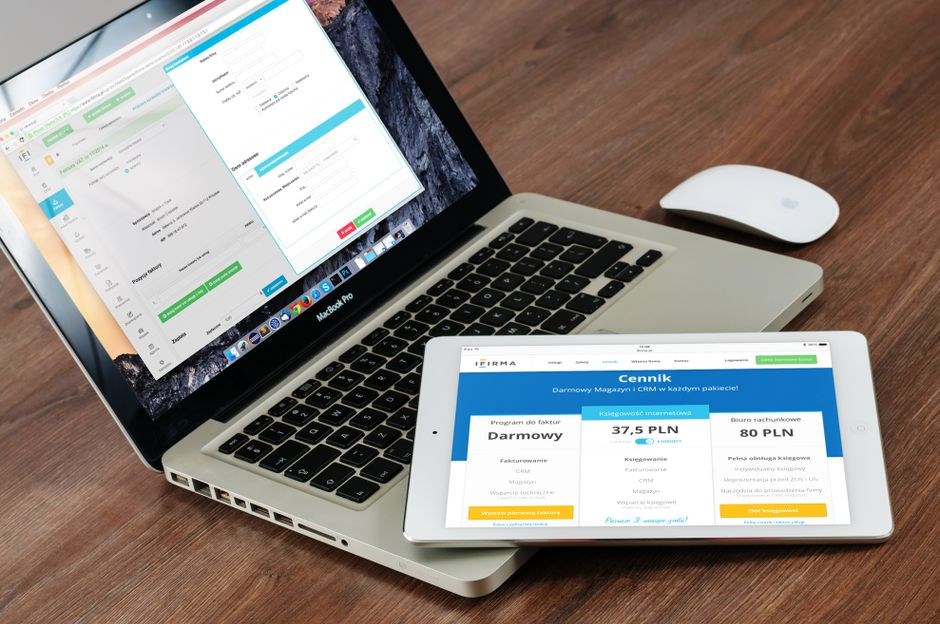
Start by drafting a network diagram in a vector editor. Export it as a high‑resolution image, then import into a PDF tool that supports form fields. Add interactive elements—text boxes, radio buttons, hyperlinks—to capture config data. Finally embed JavaScript to validate inputs before saving
Essential Requirements
Creating a reliable CPN PDF demands a blend of technical precision and thoughtful design. First, the source diagram must be produced in a vector format—SVG, EPS, or a native CAD file—to preserve scalability and clarity. Next, a robust PDF authoring tool that supports form fields, JavaScript, and layered content is essential; popular choices include Adobe Acrobat Pro, Foxit PhantomPDF, and open‑source alternatives such as LibreOffice Draw combined with PDF‑export plugins; The workflow should begin by importing the vector diagram into the authoring tool, ensuring that each network element (routers, switches, firewalls) is placed on its own layer. Layer management allows later users to toggle visibility, simplifying troubleshooting. After positioning, interactive form fields are overlaid: text boxes for IP addresses, drop‑down menus for protocol selection, and checkboxes for status flags. These fields must be named consistently to enable automated data extraction. JavaScript can be embedded to validate input ranges, enforce mandatory fields, and calculate derived values like subnet masks. Security is paramount; the PDF should be encrypted with AES‑256, and permissions should restrict printing or editing unless explicitly granted. Finally, the document is signed digitally using a trusted certificate to ensure authenticity and prevent tampering. By following these steps, engineers produce a CPN PDF that is functional and secure, and facilitating and long‑term documentation.
Additionally, version control is critical. Store the original source files and the generated PDFs in a repository such as Git or a dedicated document management system. Use semantic naming conventions that encode project, revision, and date, e.g., NetPlan_v3_20260725.pdf. This practice simplifies rollback and audit trails. For large networks, consider embedding a table of contents that links to specific diagram sections, enabling quick navigation. Hyperlinks can point to external configuration guides or vendor documentation, enriching the PDF’s utility. Finally, maintain a changelog within the PDF’s metadata, detailing modifications, responsible personnel, and timestamps. This metadata can be extracted programmatically for compliance reporting. All steps, now.
Step‑by‑Step Creation Process

Begin by selecting a vector diagram of your network, exported from a design tool like Visio or Lucidchart in SVG format. Open your PDF authoring application—Adobe Acrobat Pro, Foxit, or the open‑source LibreOffice Draw with the PDF export extension. Import the SVG file onto a blank PDF canvas, ensuring the resolution remains vector to avoid pixelation. Organize the diagram into logical layers: separate physical topology, logical routing, and security zones. Use the layer panel to lock background layers and enable only the overlay layers for editing. Next, overlay interactive form fields: place text fields over each device name, IP address, and interface description. Assign unique field names following a consistent naming convention (e.g., dev1_ip, dev2_ip). For fields that require selection, insert drop‑down menus populated with protocol options such as OSPF, BGP, or EIGRP. Add checkboxes for status indicators like “Active” or “Maintenance.” Embed JavaScript to perform validation: ensure IP addresses fall within the correct subnet, and that mandatory fields are not left blank. Test the script by entering sample data and verifying that error messages appear as expected. After all fields are placed, apply security settings: enable AES‑256 encryption, set a password for opening, and restrict editing permissions to authorized users only. Finally, digitally sign the PDF using a trusted certificate to guarantee authenticity and prevent tampering. Use bookmarks for quick navigation. Add a summary page.

Tools and Software for CPN PDF
CPN PDF creation relies on tools. Popular choices include Adobe Acrobat Pro for form fields, Foxit PhantomPDF for editing, and LibreOffice Draw with PDF export. Each offers strengths for network diagram integration. Add form fields and encrypt for security

Free and Open‑Source Options

Free and open‑source tools for creating and managing CPN PDFs are essential for teams that prioritize cost efficiency and flexibility. LibreOffice Draw offers a vector drawing environment and native PDF export, allowing users to embed interactive form fields, hyperlinks, and metadata. PDFtk Server provides a lightweight toolkit for merging, splitting, and encrypting PDFs, and can be combined with ReportLab to generate PDFs programmatically. The Scribus delivers advanced layout features and PDF/A compliance, useful for archival. GIMP can create raster overlays that are merged into a PDF using Ghostscript. All these tools are freely available, supported by active communities, and can be integrated into CI pipelines to automate up‑to‑date network documentation. They also provide password protection and digital signatures without proprietary software.
Community contributions enrich these tools. LibreOffice extensions include a “PDF Form Builder” add‑on that simplifies form creation. Inkscape users can install the “PDF Import/Export” extension to preserve layer structure. Ghostscript enables high‑quality rasterization of vector layers, ensuring printed diagrams remain crisp; Because all applications are released under permissive licenses (GPL, LGPL, MIT), organizations can adapt the source code to meet compliance standards or embed the tools into build systems without legal risk. Additionally, documentation and tutorials are available on the official websites, facilitating quick onboarding for new users. All tools support cross‑platform usage. OK! Thank you! 🙂
Commercial Solutions
For enterprises that require support, features, and integration with existing workflows, several commercial platforms specialize in CPN PDF creation and management. Graphviz Enterprise extends the open‑source Graphviz engine with a web‑based interface, collaboration, and PDF generation that preserves vector fidelity; Visio Pro for Network Design offers a template library, diagramming, and native PDF export with encryption and digital signature capabilities. Adobe Acrobat Pro DC provides a PDF authoring suite, allowing users to embed interactive forms, annotations, and secure permissions directly into CPN documents. Bluebeam Revu focuses on markup, enabling teams to annotate PDFs, track changes, and export finalized network schematics with version control. Each solution typically includes support contracts, guarantees, and certifications (ISO 27001, SOC 2), ensuring that sensitive network diagrams remain protected and audit‑ready. Licensing models vary from subscription‑based to perpetual licenses, with volume discounts. Integration with identity providers (SAML, LDAP) and single‑sign‑on (SSO) further streamlines user access. These tools also support workflows via APIs, generating updated CPN PDFs on code commits or infrastructure changes. When selecting a solution, evaluate feature parity, scalability, and roadmap to align with long‑term network documentation strategy. These solutions also integrate with cloud services, enabling real‑time updates across teams daily. All rights ©2026

Common Issues and Troubleshooting
When a CPN PDF fails to render, verify vector data integrity, missing fonts, and unsupported features. Use a validator to detect syntax errors and upgrade the rendering engine. Simplify complex diagrams or split large files to improve performance now.!
File Corruption Problems
Corruption in CPN PDF files usually originates from incomplete writes, power interruptions, or software incompatibilities. When a PDF is being generated, the rendering engine may fail to flush all buffers; leaving placeholders that later resolve to broken links or missing layers. Users often see blank sections, garbled symbols, or the file refusing to open. A systematic diagnosis starts by checking the file size against expected metrics; a significantly smaller size suggests truncation. Opening the file in a hex editor and locating the ‘%%EOF’ marker can confirm whether the stream is complete. Duplicate object references or orphaned streams can corrupt the cross‑reference table. Transfers over FTP or email should use binary mode; ASCII mode can corrupt binary streams. Repair utilities such as Adobe Acrobat’s “Preflight” or open‑source tools like qpdf can rebuild the cross‑reference table and recover lost objects. In stubborn cases, restoring from a backup or regenerating the PDF from the source CPN model is the most reliable fix. Embedding a self‑checking routine in the CPN modeling tool that generates a checksum for each PDF export allows early detection of corruption. Add checksum validation now. Version control for CPN models and PDFs, with signed hashes for each revision, helps track changes. Implementing automated integrity checks during export prevents data loss to ensure reliability. Secure transfer protocols like SFTP or HTTPS protect against tampering during transit.

Compatibility with PDF Readers
CPN PDF files embed complex network diagrams that rely on vector graphics, embedded fonts, and scripting. While most modern PDF readers—Adobe Acrobat, Foxit, SumatraPDF, and the built‑in viewers of Chrome, Edge, and Firefox—support the core PDF 1.7 specification, older readers may miss features such as XFA forms or JavaScript. To maximize compatibility, keep the PDF version to 1.4 or 1.5, avoid font subsets, and embed all fonts. Use linearized PDFs for web viewing. Test the file on at least three readers: a full‑featured commercial reader, an open‑source reader, and a browser’s built‑in viewer. If the file fails to render, check the PDF/A compliance mode; some readers reject non‑compliant color profiles. For elements, ensure that form fields use standard AcroForms rather than XFA, as many readers ignore XFA. When embedding images, use JPEG or PNG with progressive encoding to reduce load times. If the file contains encrypted sections, use standard AES‑128 encryption; some readers cannot handle AES‑256 without additional plugins. Finally, include a PDF/UA conformance tag to aid accessibility tools. By following these guidelines, CPN PDFs will display consistently across diverse platforms, preserving diagram integrity and user experience. If a reader reports a missing font, the PDF viewer will typically substitute a generic font, which can distort the diagram; embedding fonts prevents this issue. Finally, always validate the PDF against the PDF/UA and PDF/A standards using tools like veraPDF before distribution. Ensuring cross‑platform rendering consistency reduces support overhead and speeds up deployment cycles for teams!

Best Practices and Resources
Adopt consistent naming, version control, and secure encryption. Use PDF/A for archival, embed all fonts, and validate with veraPDF. Leverage open‑source libraries like Apache PDFBox for automation. Engage forums such as Stack Overflow and the PDF‑Tools community for support. Add shared notes!!.
Security and Encryption Tips
To safeguard CPN PDF documents, begin by selecting a robust encryption algorithm such as AES‑256. Embed the key within a secure key‑management system and avoid hard‑coding it in source files. Use PDF‑specific encryption features to restrict permissions: disable printing, copying, and editing unless explicitly allowed. Apply digital signatures to verify authenticity and integrity; choose a certificate from a trusted authority and set the signature to be visible for audit trails. Incorporate password protection that requires a strong, unique password for opening the document. For multi‑factor authentication, combine a password with a time‑based one‑time password or a smart‑card token. Ensure that the PDF/A compliance mode is enabled to preserve metadata and font embedding, which prevents unauthorized alterations. Regularly audit access logs and monitor for anomalous activity. When sharing, use secure transmission channels such as HTTPS or SFTP, and consider encrypting the PDF with PGP before upload. Finally, educate users on phishing risks and enforce a policy that mandates the use of updated antivirus and endpoint protection to guard against malware that might attempt to tamper with PDF files. By integrating these layered defenses, CPN PDF users can maintain confidentiality, integrity and availability, ensuring that sensitive network designs remain protected against accidental exposure and targeted threats. This approach secures CPN PDF lifecycle and trust.
Further Reading and Community Forums
For anyone looking to deepen their knowledge of CPN PDF, a variety of resources are available. Academic journals often publish foundational papers that detail the theory behind the CPN framework and its integration with PDF standards. Many of these papers include supplementary code hosted on open‑source platforms like GitHub, where readers can experiment with example projects and contribute improvements. The CPN Society’s monthly newsletter curates the latest research, tool releases, and case studies from industry leaders, making it a valuable source of up‑to‑date information. The PDF/A Consortium provides guidelines on best practices for long‑term preservation, which are directly applicable to CPN PDF workflows. For hands‑on guidance, the Stack Overflow community has a dedicated tag for CPN PDF, where developers share troubleshooting tips and code snippets. The r/CPN subreddit offers a casual forum for enthusiasts to discuss emerging trends, share visualizations, and collaborate on open‑source libraries. Video courses on platforms such as Udemy walk through the entire lifecycle of a CPN PDF, from design to deployment, and are suitable for beginners and advanced users alike. Finally, the LinkedIn Group for CPN Professionals connects practitioners, allowing networking, Q&A, and updates on job openings and conferences. Engaging with these communities not only sharpens technical skills but also keeps users informed about evolving standards and industry best practices. Additionally, attending annual conferences and participating in hackathons can accelerate learning and expose practitioners to cutting‑edge tools and real‑world case studies. The community shares libraries, templates, and security guidelines that help maintain compliance and protect sensitive network diagrams.!!!